
Joint Vetch or Soybeans: Which Delivers the Best Bang for Your Buck?
If you're comparing joint vetch vs soybeans for your next summer food plot, understanding the strengths of each forage can help you maximize both deer attraction and long-term forage production.
When it comes to planting successful wildlife food plots, soybeans often steal the spotlight. They're packed with protein, produce tremendous forage, and can be an excellent choice in the right situation. However, many land managers are discovering that American joint vetch deserves a place in the conversation—especially for those looking to maximize attraction, nutrition, and plot longevity.
So, which one is right for your property?
The Case for Soybeans
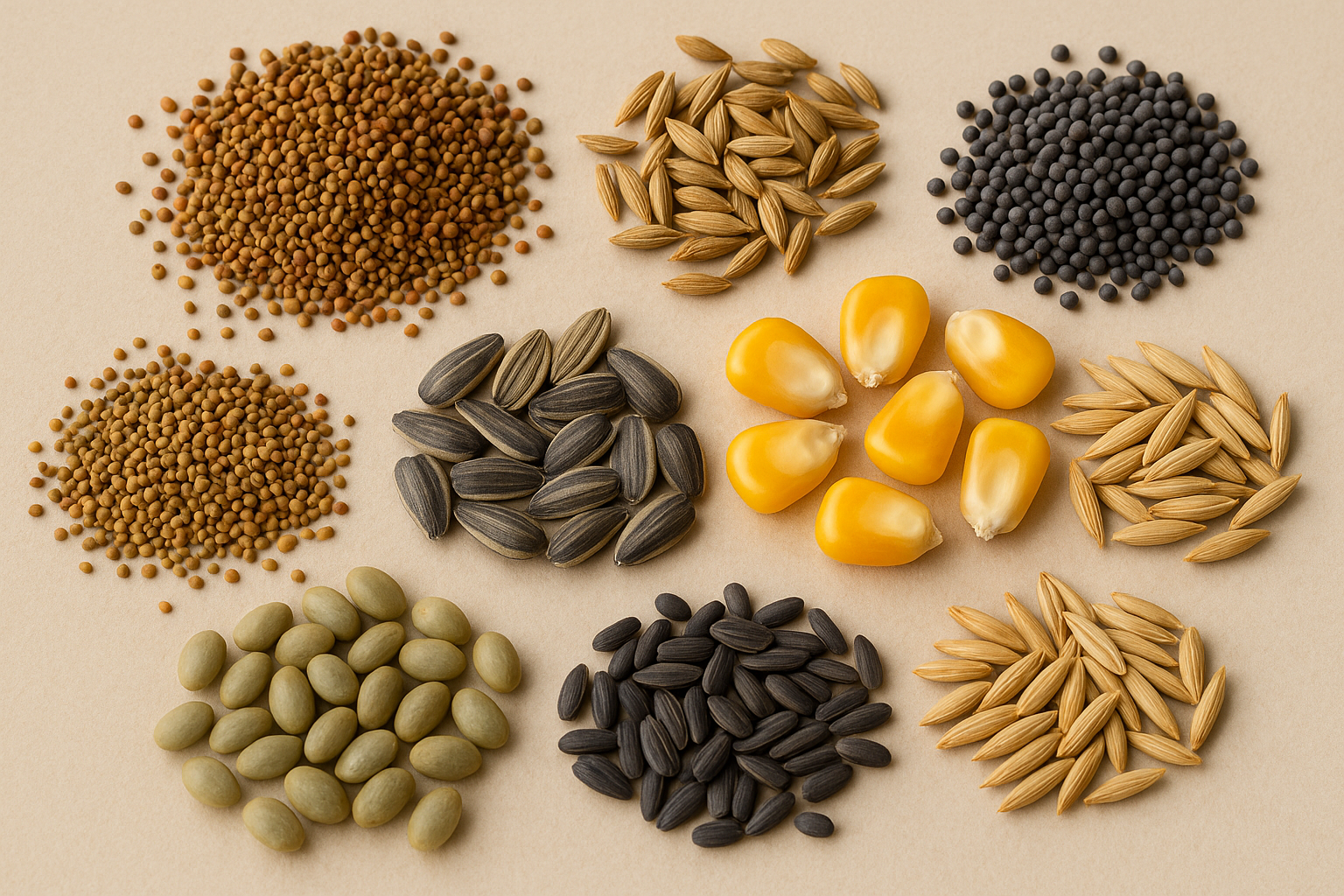
Soybeans have long been considered one of the premier warm-season food plot crops. They provide an excellent protein source for antler growth, fawn development, and overall herd health at a reasonable cost per pound. Soybeans provide excellent forage early in the growing season and can provide high-energy pods for late-season hunting if the plants survive.
On the contrary, they are extremely vulnerable to overgrazing if you don't plant large amounts of acreage or fence in the young plants during establishment. This makes the cost go up and makes it tough for the small acreage landowner to plant enough for the deer herd to utilize the plot for a long enough period throughout the summer.
Why More Managers Are Planting Joint Vetch
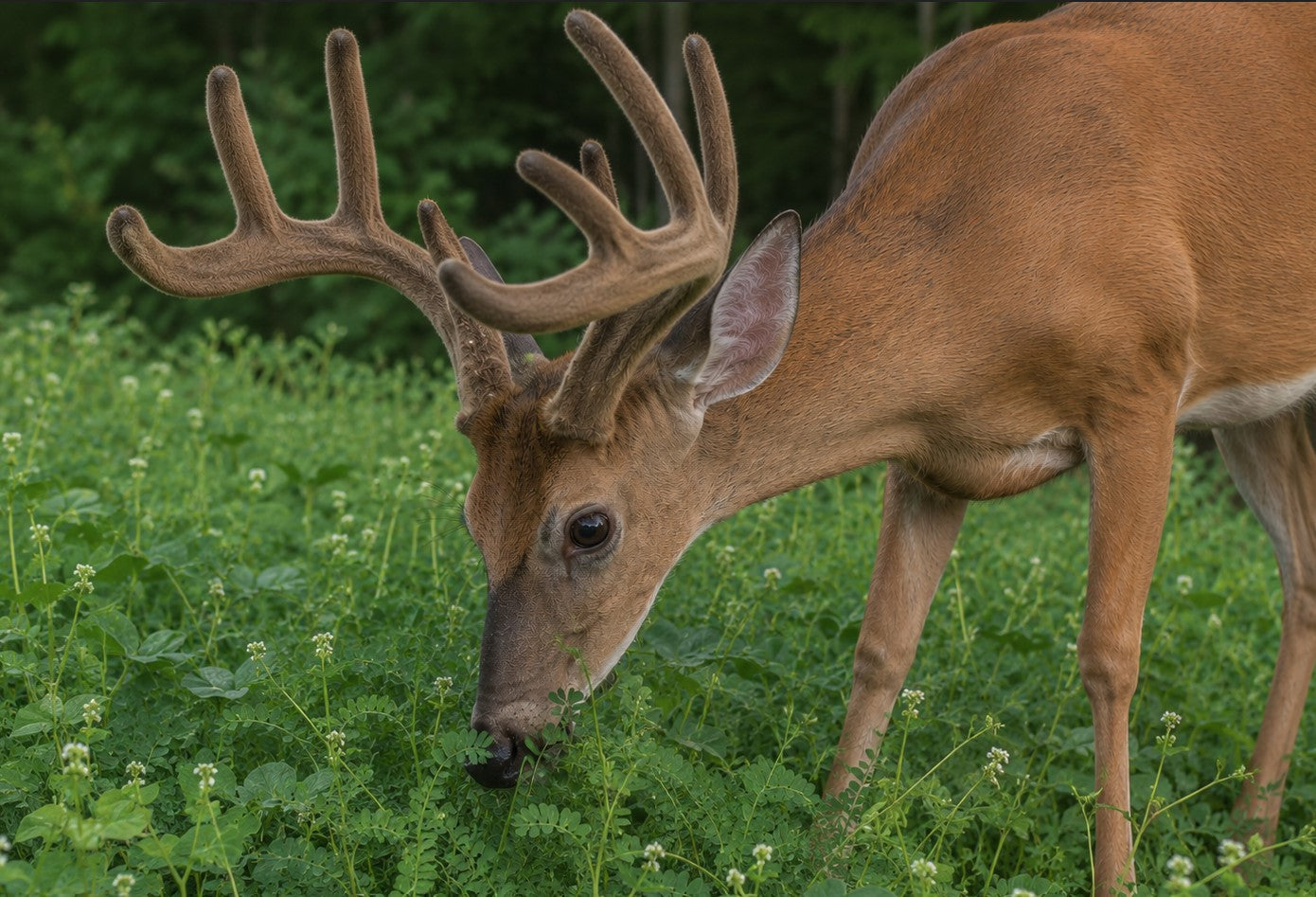
Aeschynomene, commonly known as American joint vetch or deer vetch, is a warm-season annual legume that has quietly become one of the most productive wildlife forages available. It has been around for many years and utilized by serious deer managers for a long time, especially in the southern regions of the country. However, it has gained much popularity in the last several years due to its graze tolerance.
Like soybeans, joint vetch is a legume, meaning it produces its own nitrogen. Also, like soybeans, vetch routinely tests around 20–30% crude protein, providing excellent nutrition during the critical summer months. The biggest benefit to joint vetch is its graze tolerability. While soybeans can quickly disappear under heavy deer pressure, joint vetch continually grows while being grazed, extending the life of your food plot. This makes it an outstanding choice for small food plots.
One downside for most food plotters is the cost of vetch seed. However, if you look at the longevity that you will get by using joint vetch as compared to other seeds such as soybeans, then the benefits outweigh the cost. It also helps to mix with other companion crops such as cowpeas (which also have good grazing tolerability and are very low in cost) and buckwheat (great soil builder and excellent grazing tolerance).

Featured Product: Tecomate Velvet Patch
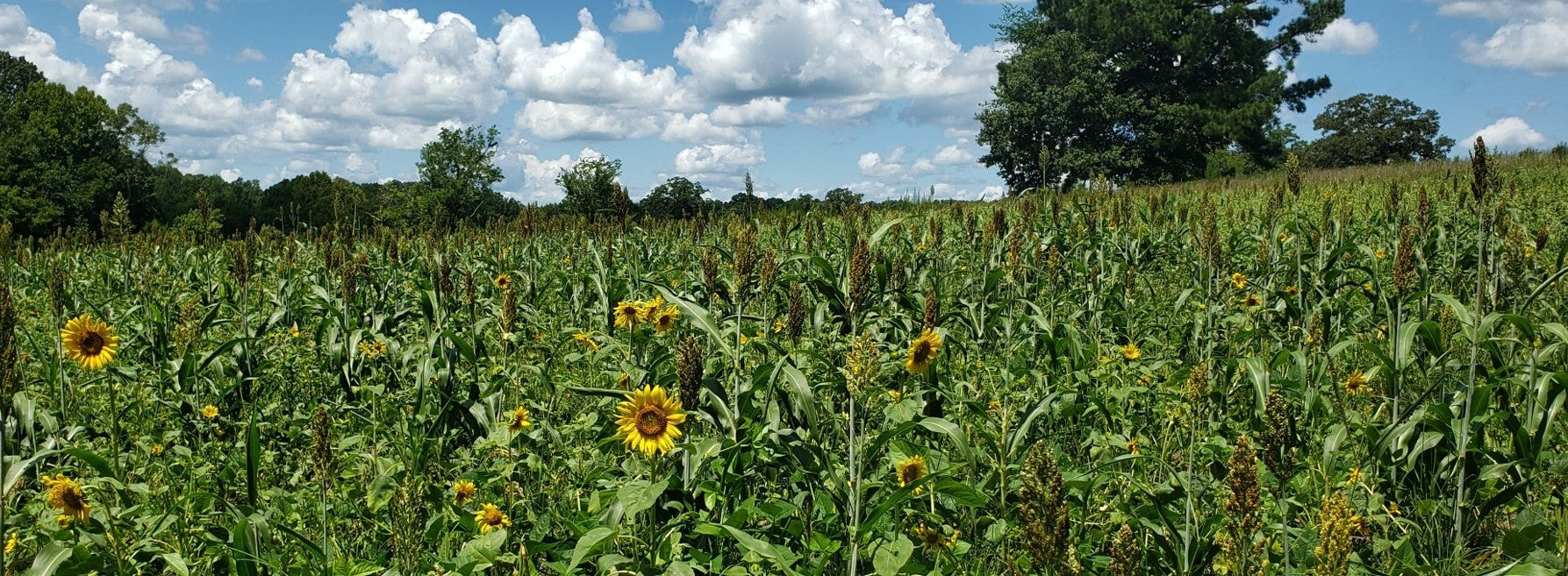
This is why we created Velvet Patch, a three-way blend of American joint vetch, cowpeas, and buckwheat to give you the ultimate summer food plot, especially for those tucked-away small plots deep on your property.
You've still got time to plant this summer, so give joint vetch a try. You won't be disappointed!


Leave a comment